
Your needs, this model
Does it fit your priorities?
Does the fi-4860C2 hold 500 A3 sheets?
No. The exact archived specification and operator guide give 500 sheets for A4/Letter paper at 80 g/m² (20 lb), and the operator guide's graph explicitly changes capacity by size and paper weight. Do not use the Letter/A4 maximum as an A3 load estimate; check the exact stock against the manual and the physical unit.
Explore this need in the finder →Does its historical TWAIN/ISIS listing mean I can connect it to a modern USB computer?
No. The exact archived page lists Ultra Wide SCSI (SE) with a 68-pin connector; it does not list USB. TWAIN/ISIS identify historical software interfaces, not a current driver, SCSI controller, cable, application, license or successful connection. Verify the exact board and complete host chain before relying on it.
Explore this need in the finder →Does Manual Feed mode turn the fi-4860C2 into a flatbed or a safe bypass for photographs and envelopes?
No. The guide's mode raises the pick roller and puts originals on the hopper table; the model has no separate glass platen. Its paper guidance warns that uneven, curled, folded, damaged and photographic originals may not scan successfully and lists clipped or stapled sheets as do-not-use. A manual loading mode does not remove those restrictions.
Explore this need in the finder →The Fujitsu fi-4860C2 is an earlier production scanner built around a large sheet feeder, automatic duplexing and a legacy host interface. PFU America's U.S. roster lists the exact model under Production / Discontinued for Service, so this is an assessment of a historical model—not a claim that a current unit, service plan or seller offer exists. PFU's archived product page warns that its specifications may be out of date. No source reviewed here identifies a live U.S. retail package or the condition of any used machine.
Where its capacity helps—and where the headline stops
For compatible loose paperwork, the 500-sheet hopper is the standout: the exact model page and operator guide qualify that maximum as A4/Letter at 80 g/m² (20 lb). The guide also shows that capacity changes with both sheet size and paper weight. That matters in an A3 workflow: the scanner can handle A3/11-by-17 originals, but the Letter/A4 500-sheet figure is not an A3 load rating. Use the page-specific chart for the actual stock rather than loading a full hopper by analogy.
The manufacturer's mechanical speed is 60 pages per minute and 120 images per minute for color A4 portrait at 200 dpi with JPEG compression; the archived table gives a faster A4 landscape figure of 74/148. These are specified scanner rates, not observed job times. PFU notes that host data transfer and software processing change real throughput. Neither number explains how long a mixed job, indexing or OCR step will take, and the sources reviewed do not establish a daily duty limit.
The model is duplex and color-capable, with standard ultrasonic multi-feed detection listed by the manufacturer. Its long-paper figure is 878 mm, but the exact driver guide limits the fi-4860C2's long-page mode to black and white. Treat that as a narrow mode, not evidence for long color originals. The archived product table gives a 400 dpi optical resolution; it does not establish a particular used unit's calibration or image quality.
Manual loading is not another paper path
The operator guide describes a distinct Manual Feed Mode: the operator lifts the pick roller to a magnetic catch and places documents on the hopper table. The wording describes a feeder setup, not a glass bed or a separate bypass tray. The scanner has no documented flatbed, so bound material and pages that need to remain still against glass are a poor match. Nor does manual loading override the model's paper restrictions: the guide says uneven-thickness items such as envelopes and attached photographs may not feed successfully; it warns about curled, folded, torn, photographic and other difficult stocks, and says not to use paper-clipped or stapled sheets. Check each original against the manual before treating it as an occasional exception.
The standard stated sheet-weight range begins at 52 g/m². PFU lists a separate fi-486TRK thin-paper kit that lowers the minimum to 31 g/m², but the included or installed status of that option is unknown for any uninspected unit. The model page also lists pre- and post-imprinters; both may be attached, but the two cannot operate at the same time. A seller's option board, imprinter, cartridge, software media or cable should never be inferred from the model name.
The legacy connection is the buying hurdle
The exact archived specification lists Ultra Wide SCSI (SE) through a shielded 68-pin connector. It does not document USB, Ethernet or Wi-Fi. The page carries TWAIN and ISIS labels and an old operating-system set, but those historical driver references are not proof that a current computer, adapter, cable, scanning application or software license will work. Before considering a used unit, identify its interface board and serial/nameplate, then confirm the complete SCSI-to-host chain and demonstrate a scan in the software you plan to use. A TWAIN requirement alone is not a USB connection.
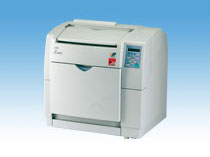
The body is listed at 45 kg (99 lb), about 20.5 by 17 by 20.6 inches; PFU says those dimensions exclude the ADF chute and stacker. This is a fixed-station device, not a light desktop purchase, and the missing feeder parts can change the space needed. The image on this page is the manufacturer's exact-model photograph, not a picture of an offered unit, accessories or packaging.
Which earlier alternative fits better?
The earlier fi-5530C2 is a smaller-capacity A3 duplex ADF alternative with a documented USB route alongside Ultra SCSI; its own sources specify a much lower load for A3 than for Letter/A4. It is a more plausible starting point when a USB host matters more than the fi-4860C2's higher qualified hopper maximum, though its historic software still needs a current-host check. The fi-4750L takes a different trade: it combines a duplex feeder with a separate flatbed and a documented SCSI-2 path, while its 250-sheet maximum is qualified at a different paper basis. Those are functional differences, not interchangeable configurations.
The fi-4860C2 only makes sense as a carefully verified used production machine for supported loose paper when its SCSI interface and compatible capture host already exist. Confirm the nameplate says fi-4860C2—not the separately rostered unqualified fi-4860 or a nearby suffix variant—then check the exact hopper chart, physical state, roller/lamp history, included boards, cabling, options, manuals, return terms and any service claims. This research-based review uses manufacturer documents; no hands-on testing, ownership, individual unit inspection or present availability is claimed.
Primary references: PFU America discontinued roster; archived fi-4860C2 product specifications; fi-4860C2 Operator's Guide; and PFU driver guide's fi-4860C2 section.
Key specifications
Key details at a glance
| Scanner class | Professional production adf |
|---|---|
| Manufacturer-listed simplex rate | 60 ppm |
| Manufacturer-listed duplex image rate | 120 ipm |
| Automatic document feeder capacity | 500 sheets |
| Optical resolution | 400 dpi |
| Connection options | Ultra Wide SCSI (SE) |
| Automatic duplex capture | Yes |
| Separate manual-feed route | Yes |
| Touchscreen | No |
| TWAIN driver documented | Yes |
Use the exact model’s instructions for operating limits, supplied equipment and version differences.
Sources for this review
Sources for this assessment
Compare the workflow before you choose
Use the finder to test your connection, paper and software requirements against the documented scanner arrangements.