
Your needs, this model
Does it fit your priorities?
What makes the fi-6230 different from the fi-6130?
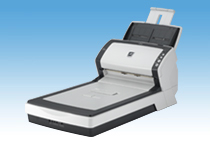
The exact U.S. parts differ: PA03540-B555 is fi-6230; PA03540-B055 is fi-6130. The fi-6230 adds an 8.5 × 11.69-inch glass platen while retaining a 50-sheet Letter/A4 ADF; the fi-6130 has no flatbed.
Explore this need in the finder →Does manual feeding mean a second inlet?
No. The exact fi-6230/fi-6130 guide describes loading individual pages through the same ADF during a configured timeout. The fi-6230 glass platen is a separate page-by-page scanning surface; it does not make a second automatic feeder.
Explore this need in the finder →Is the fi-6230 ADF a 50-sheet daily rating?
No. The historical U.S. datasheet lists a 50 Letter/A4 sheet active load at 20 lb and notes maximum capacity varies with paper. That is a per-loading threshold, not a daily volume, a mixed-paper assurance or a test of an individual used machine.
Explore this need in the finder →Review basis: This research-based assessment is for the U.S. Fujitsu fi-6230, part PA03540-B555, a duplex ADF scanner with an integrated flatbed. It is not a hands-on review, ownership report or speed test. The exact fi-6130 is an ADF-only sibling, while fi-6230Z is a separately named model with different identity evidence. PFU America lists fi-6230 as discontinued for service; that roster is not an offer or a condition report.
Two capture surfaces, two different jobs
The fi-6230’s main distinction is its combination of a duplex automatic feeder and an 8.5 by 11.69-inch flatbed. The U.S. datasheet explicitly distinguishes it from the ADF-only fi-6130 and assigns the part number PA03540-B555. In practical terms, a paper batch uses the feeder; a book page, one delicate sheet or another original that should lie on glass uses the platen one at a time. The bed does not increase the feeder’s stack size, and it is not an A3 glass surface. The ADF’s Legal-size capability and carrier-sheet process for selected larger originals should not be mistaken for a larger built-in flatbed.
PFU rates the ADF for up to 50 Letter/A4 sheets at 20 lb (80 g/m²) in one active load, and notes that actual maximum capacity varies by paper weight. The model-specific operator guide also sets a 5 mm stack height. That turns “50 sheets” into a qualified loading limit, not a universal promise for mixed weights, curled pages or every paper size. It is not a per-day throughput figure and says nothing about whether an older unit’s pickup roller, brake roller or pad has been maintained.
The U.S. table gives color at 30 ppm / 60 ipm at 200 and 300 dpi, grayscale/monochrome at 40/80 at 200 dpi and 30/60 at 300 dpi. Those are manufacturer rates using JPEG compression, with data transfer and software processing affecting actual jobs. They are not a report of searchable PDF speed, OCR results or the condition of a specific second-hand machine.
Manual sheet feed is separate from the flatbed
The official fi-6130/fi-6230 guide describes Manual Feeding as placing documents into the ADF one at a time and loading the next page before a configured timeout when a continuing scan is wanted. This is an ADF operating mode, not a separate inlet or another paper chute. It differs from the U.S. datasheet’s Intelligent MultiFeed Manual Bypass, which is an overlap-handling function. It also differs from putting a page on the glass. The flatbed is a genuinely separate optical surface; manual feed repeatedly uses the feeder path. A buyer should check the guide’s paper, card and special-original restrictions rather than infer that “manual” means the scanner can accept any envelope or fragile original.
The manual and datasheet document ultrasonic multifeed detection and related handling functions, but no sensor guarantees jam-free operation or prevents all paper damage. PFU’s Global page also describes feeding an A3 original through a carrier sheet in single-sided mode; the carrier sheet is an optional accessory in the archived materials, not something guaranteed with a present used offer. If the flatbed is the reason to choose fi-6230, verify its glass and cover condition independently from the ADF’s feed condition.
USB and historical driver support
The U.S. datasheet lists USB 2.0/1.1 Type B and TWAIN/ISIS. Its OS table names Windows 2000, XP and Vista-era platforms. These references identify historical support but cannot establish a modern Windows release, Mac or Linux compatibility, a 64-bit application pairing, whether a driver can still be obtained, or whether a pre-owned software licence transfers. Check the exact host, capture application and licence situation before relying on a legacy TWAIN/ISIS driver. No Wi-Fi, phone/tablet route or direct cloud workflow is documented for this USB model.
The U.S. sheet describes an original bundle of software and items, but it is a historical package list. A seller may not have the original cable, power supply, setup disc, Acrobat/VRS software, carrier sheet or other accessory. Ask about each item and verify that the scanner actually connects and scans with the intended system; do not assume the old box contents remain available or usable.
Read the long-page limits by source
The U.S. datasheet says the model can scan long documents up to 122 inches, with documents above 35 inches limited to TWAIN at 200 dpi or less. The exact Global fi-6230 page gives 121.92 inches and a 34-inch boundary. Rather than silently merging these regional statements, keep the U.S. number attached to the U.S. part and the Global statement attached to the Global archive. PFU also calls out paper-weight limits and an A8-specific minimum; consult those instructions for the actual originals.
The fi-6230 is most plausible as an earlier USB duplex machine for a buyer who specifically values both an ADF and a letter-size flatbed, has verified software, and can examine the exact used unit. Choose the ADF-only fi-6130 only if the glass is not needed; do not pay or plan around a platen that is absent from that model. Conversely, do not assume the fi-6230Z is interchangeable just because its name also begins with 6230: its part number is not established in the reviewed U.S. source and its exact speed documentation conflicts with the shared guide. Before buying, confirm PA03540-B555 on the label, inspect the glass and ADF separately, request a duplex and platen demonstration, and verify host support, maintenance, accessories and return terms.
Sources checked: PFU America U.S. discontinued-for-service roster; PFU U.S. fi-6130/fi-6230 datasheet; PFU/Ricoh exact fi-6230 archived page; PFU U.S. fi-6130/fi-6230 Operator’s Guide.
Key specifications
Key details at a glance
| Scanner class | Professional desktop sheet-fed scanner |
|---|---|
| Manufacturer-listed simplex rate | 30 ppm |
| Manufacturer-listed duplex image rate | 60 ipm |
| Automatic document feeder capacity | 50 sheets |
| Optical resolution | 600 dpi |
| Connection options | USB |
| Automatic duplex capture | Yes |
| Separate manual-feed route | Yes |
| Touchscreen | No |
| TWAIN driver documented | Yes |
Use the exact model’s instructions for operating limits, supplied equipment and version differences.
Sources for this review
Sources for this assessment

Compare the workflow before you choose
Use the finder to test your connection, paper and software requirements against the documented scanner arrangements.